Lion's Mane Mushroom for Memory: What the Science Says

Few natural ingredients have jumped from obscure foraging forums to mainstream cognitive supplements as fast as Lion's Mane. Scroll any wellness feed and you'll find this shaggy white mushroom credited with sharper memory, laser focus and a "rebuilt" brain. So it's fair to ask the unglamorous question: what does the actual research show?
The honest answer is more interesting than the hype. Lion's Mane (botanical name Hericium erinaceus) has a genuinely intriguing mechanism, one well-designed human trial that stands out, and a body of evidence that remains promising but unfinished. This guide walks through all of it — the science, the trials, the dosage questions, the safety profile, and where a single ingredient realistically fits in a memory strategy.
📋 In This Article
What Is Lion's Mane Mushroom?
Lion's Mane is an edible, white, cascading mushroom that grows on hardwood trees — its dangling spines give it the mane-like look behind the name. In Japan it's called yamabushitake; in traditional Chinese medicine it has been used for centuries. Today it lives a double life: a gourmet ingredient prized for its crab-like flavor, and one of the most studied "nootropic" mushrooms in cognitive supplements.
What sets it apart from culinary mushrooms is its chemistry. Lion's Mane is unusually rich in two families of bioactive compounds — hericenones, concentrated in the fruiting body (the part you'd eat), and erinacines, concentrated in the mycelium (the root-like network). Both are the focus of the neuroscience research, and the distinction matters when you evaluate products.
Lion's Mane's hericenones and erinacines are the compounds researchers study for their effect on nerve growth factor.
How It May Work: The NGF Connection
The reason scientists keep returning to Lion's Mane comes down to one protein: nerve growth factor (NGF). NGF is essential for the growth, maintenance and survival of neurons, and researchers believe an age-related decline in NGF is linked to cognitive aging.
Here's the elegant problem NGF poses — and why Lion's Mane is interesting. You can't simply swallow NGF. As a protein, it cannot cross the blood-brain barrier, and it is rapidly broken down by digestive enzymes. So the research interest isn't in adding NGF, but in compounds that prompt the brain to make more of its own. In laboratory and animal studies, the hericenones and erinacines in Lion's Mane have been shown to stimulate NGF synthesis in neuronal cells and to support neurite outgrowth — the extension of the connecting branches between neurons.
Researchers at the University of Queensland reported in 2023 that active compounds from Lion's Mane promoted nerve cell growth and improved memory formation in preclinical trials, identifying a molecular pathway behind the effect. It's a compelling mechanism for neuroplasticity — the brain's ability to form new connections.
💡 The Important Caveat
Much of the NGF and neurite-outgrowth evidence comes from cell cultures and animal models, not humans. A promising mechanism in a petri dish is a reason to investigate — not proof of a benefit you'll feel. That's exactly the gap the human trials below try to fill, with results that are encouraging but not yet conclusive.
What the Clinical Trials Actually Show
This is where honesty matters more than enthusiasm. The human evidence on Lion's Mane is real, but it is built on small, mostly short studies — and the results are genuinely mixed.
The standout trial (2009, adults 50–80)
The most cited human study is a Japanese randomized, double-blind, placebo-controlled trial in adults aged 50 to 80 with mild cognitive impairment. Participants took about 3 grams of powdered Lion's Mane daily for 16 weeks. The supplemented group showed significant improvements in cognitive scores compared with placebo. Tellingly, when researchers followed up four weeks after the participants stopped, those cognitive gains had declined — a strong hint that the effect depends on continued, consistent use.
The mixed picture in healthy adults
Results in healthy, younger adults are less consistent. The Alzheimer's Drug Discovery Foundation notes that in one randomized placebo-controlled trial of 41 healthy adults aged 18–45, four weeks of Lion's Mane actually produced slightly worse delayed word-recall than placebo, and that two further small trials in healthy young adults failed to show cognitive improvement. A separate 2023 acute study did detect some measurable changes in cognitive performance about 90 minutes after a single dose — interesting, but far from definitive.
The bottom line on evidence
A 2025 narrative review of Hericium erinaceus concluded that regular consumption showed improved memory recall and reduced symptoms in early studies, likely through NGF stimulation and reduced neuroinflammation — while repeatedly emphasizing that trials have been small and that larger, longer studies are needed. Several new clinical trials are now underway. The fair summary: a real signal in older adults with mild impairment, an unsettled picture in healthy young people, and a research field that is still maturing.
| Study Type | What It Found | Strength of Evidence |
|---|---|---|
| Cell & animal studies | Consistent stimulation of NGF and neurite outgrowth; improved memory in animals | Strong mechanism — but doesn't prove human benefit |
| 2009 trial, adults 50–80 (MCI) | Significant cognitive improvement over 16 weeks; gains faded after stopping | Promising, but small sample |
| Healthy young-adult trials | Mixed: some null results, one acute-dose signal at 90 minutes | Inconsistent |
| 2025 narrative review | Memory recall and neuroprotective signals reported; calls for larger trials | Encouraging synthesis, not definitive |
Sources: Mori et al. (2009); Alzheimer's Drug Discovery Foundation; Contato & Conte-Junior narrative review (2025).
Dosage, Forms and Quality
Dosage is where most consumer confusion lives, because "Lion's Mane" on a label can mean very different things.
- Raw fruiting-body powder — what the 2009 trial used, at roughly 3 g/day split into three doses. It's whole-food, but the concentration of active compounds varies.
- Standardized extracts — concentrated to a defined level of hericenones or beta-glucans, often dosed lower because the actives are denser. A "10:1" extract, for example, concentrates the compounds from ten parts mushroom into one.
- Mycelium-on-grain — a cheaper form that includes the grain substrate, which can dilute the active content unless clearly specified.
The practical takeaway: the milligram number on the front of a bottle tells you little on its own. What matters is the form, the extraction ratio, and whether the product is third-party tested for what it claims to contain. A smaller dose of a well-characterized extract can outperform a larger dose of unspecified powder.
🔬 Why Consistency Beats Dose
The single clearest lesson from the human research is about time, not quantity. The meaningful cognitive gains in the 2009 study appeared after 16 weeks of daily use — and reversed when use stopped. Lion's Mane is not a pre-exam booster; it's an ingredient that, if it works for you, rewards steady daily intake over months.
Safety and Side Effects
On safety, the picture is reassuring but not blank. The Alzheimer's Drug Discovery Foundation reports that across small clinical trials Lion's Mane has generally been well tolerated, with side effects limited to occasional gastrointestinal discomfort, nausea or skin rash. It also responsibly flags two cautions: there is little published data on long-term safety, and there is a rare case report of a serious respiratory reaction possibly linked to consumption.
Sensible precautions apply. Anyone with a mushroom allergy should avoid it. Those taking blood thinners or other prescription medications, people with scheduled surgery, and anyone pregnant or breastfeeding should talk with a healthcare professional before starting — as with any supplement.
Where Lion's Mane Fits in a Memory Formula
Here's the most useful reframe in this whole discussion: memory is not governed by a single pathway, so it's unrealistic to expect one ingredient to carry the load. Lion's Mane's research strength is specific — nerve growth and neuroplasticity. That's one important lever. But recall, focus, blood flow and stress resilience each lean on different mechanisms.
This is why thoughtful formulas combine complementary ingredients rather than betting on a single "hero." Lion's Mane's NGF angle pairs naturally with:
Memory Recall
The most trial-supported herb for memory recall over 8–12 weeks — covering a pathway Lion's Mane doesn't.
Cerebral Blood Flow
Supports circulation and oxygen delivery to the brain, complementing neuron-growth support.
Membrane Integrity
Maintains the health of neuron cell membranes and neurotransmitter release.
Mental Fatigue
An adaptogen that targets the stress-and-fatigue side of cognition, a different mechanism entirely.
Calm Focus
Promotes the relaxed-alertness brain state for cleaner concentration.
Nerve Growth & Plasticity
The NGF and neuroplasticity angle — promising mechanism, best with consistent daily use.
✅ About Memopezil™
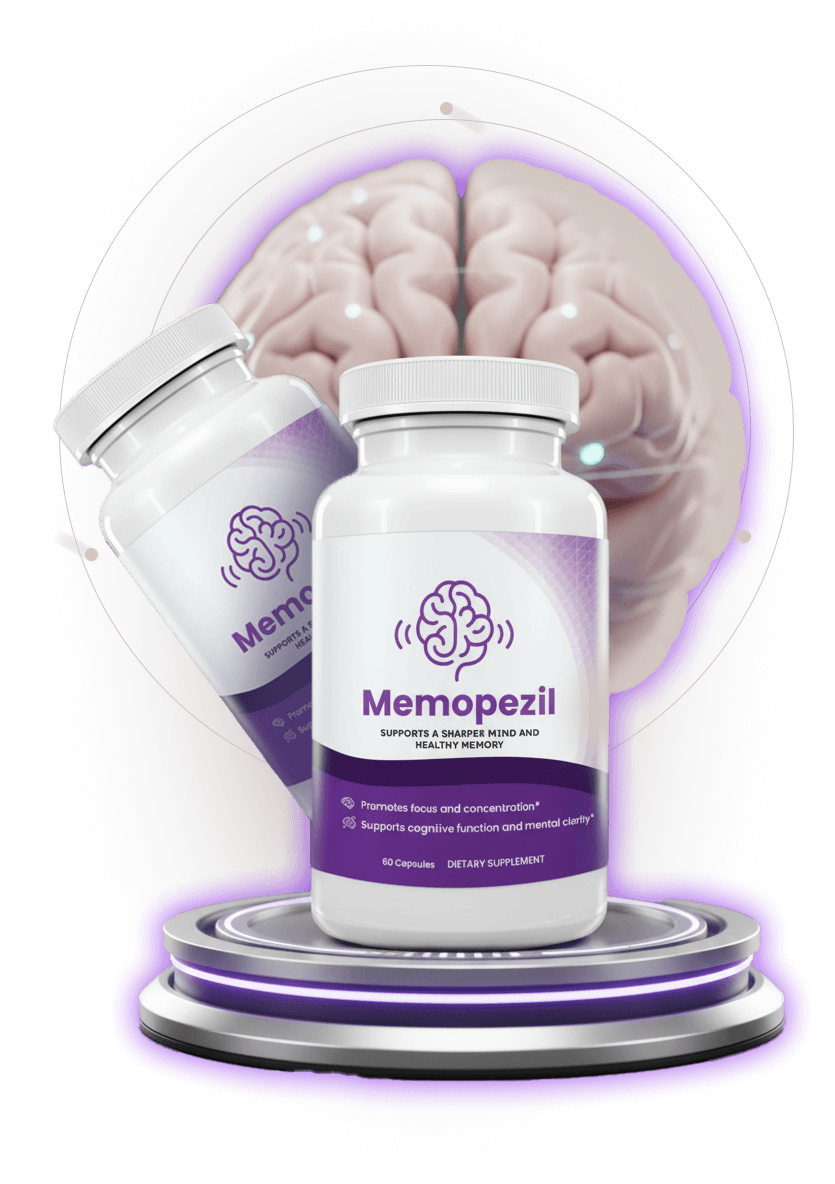
Memopezil includes Lion's Mane mushroom for exactly the reason above — and combines it with Bacopa Monnieri, Ginkgo Biloba, Phosphatidylserine, Rhodiola Rosea and L-Theanine so the formula addresses multiple cognitive pathways rather than relying on a single ingredient. It is caffeine-free, manufactured in a U.S. FDA-registered, GMP-certified facility, and comes with a 60-day money-back guarantee — enough time to evaluate it the way the research suggests: consistently. See the full Memopezil formula →
Lion's Mane — Done Right, in One Daily Formula
Memopezil™ pairs Lion's Mane with five more clinically studied ingredients to support memory, focus and mental clarity across multiple pathways. Made in the U.S., GMP-certified, caffeine-free.
Get Memopezil — Official Site Only →✓ 60-Day Money-Back Guarantee · ✓ Free U.S. Shipping on Multi-Bottle Orders · ✓ No Subscription Required
Frequently Asked Questions
Does Lion's Mane mushroom actually improve memory?
The evidence is promising but not settled. The most cited human trial — a 2009 Japanese double-blind study in adults 50–80 with mild cognitive impairment — found significant improvement over 16 weeks that faded after stopping. Other small trials in healthy young adults showed mixed or null results. The Alzheimer's Drug Discovery Foundation calls the human evidence mixed and based on small, short studies, while noting consistent preclinical NGF signals. Encouraging mechanism, real but limited human data, larger trials needed.
How does Lion's Mane work in the brain?
It contains hericenones (in the fruiting body) and erinacines (in the mycelium). In lab and animal studies these stimulate nerve growth factor (NGF), a protein essential for neuron growth and survival. Because NGF itself can't cross the blood-brain barrier when swallowed, compounds that prompt the brain to make its own NGF are of particular research interest for neuroplasticity and memory.
What is the typical dosage of Lion's Mane for cognition?
Trials have used a wide range. The 2009 mild-cognitive-impairment study used about 3 grams of powder daily in three doses; other studies used standardized extracts at lower amounts. The right dose depends heavily on whether a product uses raw powder or a concentrated extract, and on the active content — which is why extract quality matters more than the headline milligram number.
Is Lion's Mane safe to take?
In trials it has generally been well tolerated. The Alzheimer's Drug Discovery Foundation notes mild reported side effects — occasional GI discomfort, nausea or skin rash — while cautioning that long-term safety data is limited and a rare serious reaction has been reported. People with mushroom allergies, those on blood thinners or other medications, and anyone pregnant or breastfeeding should consult a healthcare professional first.
How long does Lion's Mane take to work?
There's no firm consensus. A 2023 acute study detected some changes about 90 minutes after a single dose in young adults, but the more meaningful findings in older adults with mild impairment appeared after 16 weeks of daily use — and reversed once supplementation stopped. It's best viewed as a consistency-and-time ingredient, not a quick fix.
Is Lion's Mane in Memopezil?
Yes. Lion's Mane is one of Memopezil's core ingredients, included for its researched role in nerve growth and neuroplasticity, and combined with Bacopa Monnieri, Ginkgo Biloba, Phosphatidylserine, Rhodiola Rosea and L-Theanine so the formula targets multiple pathways. Memopezil is made in a U.S. FDA-registered, GMP-certified facility with a 60-day money-back guarantee.
Sources & References
- Mori K, et al. "Improving effects of the mushroom Yamabushitake (Hericium erinaceus) on mild cognitive impairment: a double-blind placebo-controlled clinical trial." Phytotherapy Research, 2009.
- Alzheimer's Drug Discovery Foundation, Cognitive Vitality. "Lion's Mane." alzdiscovery.org
- Contato AG, Conte-Junior CA. "Lion's Mane Mushroom (Hericium erinaceus): A Neuroprotective Fungus — A Narrative Review." PMC, 2025. pmc.ncbi.nlm.nih.gov
- Docherty S, et al. "Acute effects of a standardised extract of Hericium erinaceus on cognition and mood in healthy younger adults." Frontiers in Nutrition / Nutrients, 2023–2025. frontiersin.org
- Martinez-Marmol R, et al. "Mushroom compounds boost nerve growth and memory." University of Queensland / Neuroscience News, 2023. neurosciencenews.com
- ClinicalTrials.gov. "Study Evaluating the Quality and Effects of Lion's Mane Product on Cognitive Health" (NCT06870136). clinicaltrials.gov
Disclaimer: This article is for educational purposes only and is not medical advice. Statements about dietary supplements have not been evaluated by the FDA. Dietary supplements are not intended to diagnose, treat, cure, or prevent any disease. Consult a qualified healthcare professional before starting any supplement, especially if you take medications or have a health condition.