Brain Fog After 50: 9 Hidden Causes and How to Clear It
You read the same paragraph three times and none of it sticks. A name you've known for years sits stubbornly on the tip of your tongue. You walk into the kitchen with total purpose — and stand there, blank. If this has become a regular visitor in your fifties, you're describing brain fog, and you are very far from alone.
Here is the reassuring part most people never hear: brain fog is not a diagnosis, and it is rarely the early dementia that everyone privately fears. The Cleveland Clinic describes it as a cluster of symptoms — trouble concentrating, forgetfulness, slow thinking, losing your train of thought — that usually traces back to something identifiable and fixable. UCLA Health is even more direct: the cloudy feeling is typically temporary and mild, and it does not severely affect your ability to function.
The trouble is that after 50, several common triggers tend to stack up at once — and most people only address one of them. Below are the 9 most common hidden causes of brain fog after 50, and the practical, evidence-based steps that help lift each one.
📋 In This Article
What Brain Fog Actually Is (and Isn't)
"Brain fog" is not a medical condition with a code in a doctor's chart. It is a plain-language description of a state most of us recognize instantly: thinking feels slower, hazier, and more effortful than it should. The Cleveland Clinic lists the hallmark symptoms as difficulty concentrating, forgetfulness, losing your train of thought, mental exhaustion, and not having the right words.
What makes the fifties a turning point is biology layered on top of life. Harvard Health notes that people commonly begin noticing memory lapses in their 50s or 60s — the decade when age-related chemical and structural changes begin in memory-related brain regions like the hippocampus and frontal lobes. But those gentle background changes are not the whole story. They simply lower your reserve, so the everyday triggers below hit harder than they did at 35.
🔬 The Key Distinction
According to UCLA Health, brain fog signals a degree of cognitive impairment, but it is typically temporary and mild and does not severely affect daily functioning. That is precisely what separates it from the progressive, function-limiting decline of dementia — and why most fog is so responsive to lifestyle change.
Brain fog feels like thinking through cotton wool — slower recall, weaker focus, and a frustrating "tip of the tongue" effect.
9 Hidden Causes of Brain Fog After 50
Rarely is there a single culprit. Most people who feel foggy have two or three of these overlapping. Work through the list honestly — the cause you've been ignoring is often the one doing the most damage.
Poor or Fragmented Sleep
This is the single biggest, most underrated driver. During deep sleep your brain consolidates memories and the glymphatic system flushes metabolic waste, including amyloid-beta. WebMD points out the cruel twist: too little sleep and too much can both leave you foggy, with 7–9 hours the sweet spot. After 50, sleep also fragments more easily — from joint pain, bathroom trips, or undiagnosed sleep apnea — so the hours in bed don't always equal restorative sleep.
Hormonal Changes — Menopause and Andropause
Estrogen and testosterone are not just reproductive hormones; they support neurotransmitter function and brain blood flow. OHSU notes that the onset of menopause in the late forties and early fifties can bring noticeably more fog and memory lapses, and AARP reports that a large share of women in perimenopause and menopause experience exactly this. Men experience a slower testosterone decline that can contribute too. This fog is real, hormone-driven, and usually improves as the body adjusts or with a provider's help.
Chronic Stress and Elevated Cortisol
Sustained stress floods the brain with cortisol, which interferes with the hippocampus — the region most responsible for forming new memories. Harvard Health lists stress among the issues that exacerbate everyday memory glitches. The fog of a high-pressure month is your brain rationing resources; chronic, unmanaged stress turns that temporary state into a lingering one.
Blood-Sugar Swings and Insulin Resistance
The brain runs almost entirely on glucose, so it is exquisitely sensitive to blood-sugar instability. Insulin sensitivity tends to decline with age, and the resulting spikes and crashes show up as afternoon fog, irritability, and difficulty focusing. Low blood sugar (hypoglycemia) is on the Cleveland Clinic's list of common fog causes for good reason.
Dehydration
The brain is roughly three-quarters water, and even mild dehydration measurably impairs concentration and short-term memory. UCLA Health names dehydration directly as a lifestyle cause of brain fog. The thirst signal also weakens with age, so many adults over 50 are mildly dehydrated without realizing it — a fix that costs nothing.
Medications and Polypharmacy
Many common prescriptions carry cognitive side effects: certain sleep aids, antihistamines, anti-anxiety drugs, some blood-pressure and pain medications. The more medications you take — "polypharmacy," increasingly common after 50 — the higher the chance of cognitive drag from interactions. The Cleveland Clinic specifically flags medications such as some sleep aids and pain drugs. Never stop a prescription on your own, but a medication review with your doctor or pharmacist is often revealing.
Nutrient Deficiencies (Especially B12 and Vitamin D)
Vitamin B12 absorption declines with age, and deficiency is a classic, reversible cause of fog and forgetfulness. Low vitamin D, low magnesium, and inadequate omega-3 intake are also linked to weaker cognitive performance. The encouraging news: these are simple to check with bloodwork and straightforward to correct.
Low-Grade Chronic Inflammation
Inflammatory markers such as CRP tend to creep upward with age, and chronic low-grade neuroinflammation disrupts the crisp communication between neurons — a recognized contributor to that "thinking through mud" feeling. An anti-inflammatory, Mediterranean-style pattern of eating is one of the most reliable levers for turning this down.
Underlying Conditions and Reduced Brain Blood Flow
Thyroid disorders, anemia, depression, anxiety, autoimmune conditions like lupus, and the lingering effects of viral illness can all present as fog — as can declining vascular health that reduces oxygen delivery to the brain. WebMD and the Cleveland Clinic both list a range of medical conditions behind persistent fog. If your fog is severe, sudden, or stubborn despite lifestyle fixes, this is the category to rule out with your physician.
Brain Fog vs. Dementia: How to Tell the Difference
This is the question quietly driving most people to search at 2 a.m. The distinction matters, and the patterns are usually clear once you know what to look for.
| Sign | Typical Brain Fog ✓ | Worth a Doctor's Visit ⚠️ |
|---|---|---|
| Pattern over time | Comes and goes; better on good-sleep, low-stress days | Steadily and progressively worsening month over month |
| Word finding | "Tip of the tongue" that resolves shortly | Frequently substituting wrong words or losing the thread of a conversation |
| Daily function | Annoying but you still manage work, finances, cooking | Difficulty completing once-routine tasks like paying bills |
| Familiar places | Briefly confused in a brand-new environment | Getting lost in a familiar neighborhood or your own home |
| Awareness | You notice and are frustrated by the fog | Others notice changes you don't, or there are personality shifts |
Adapted from guidance by the Cleveland Clinic, UCLA Health, OHSU and the Alzheimer's Association.
⚠️ When to See a Doctor
If your fog is sudden in onset, steadily progressing, or interfering with safety and independence — or if it appears alongside other neurological symptoms — book an appointment. A simple workup (bloodwork for B12, thyroid and blood sugar, a medication review, and a brief cognitive screen) clarifies the picture quickly, and most reversible causes are easy to treat once identified.
How to Clear Brain Fog: A Practical Plan
Because most fog after 50 is driven by modifiable factors, the cure usually lives in your habits — not a pharmacy. UCLA Health highlights a striking finding: in a study of nearly 3,000 older adults, those who practiced four or five brain-healthy habits had a 60% lower risk of Alzheimer's disease than those who practiced one or none, while two or three habits cut risk by 37%. The same levers that protect against decline also lift everyday fog.
Start with the foundations
- Protect your sleep. Aim for 7–9 hours, keep a consistent wake time, get screens out of the bedroom, and ask about a sleep-apnea screen if you snore or wake unrefreshed.
- Hydrate first. A glass of water before coffee is often the fastest same-day fog-lifter there is.
- Move your body. Exercise boosts blood flow and neurogenesis; even a brisk 30-minute daily walk counts.
- Eat anti-inflammatory. Prioritize leafy greens, berries, fatty fish, olive oil, nuts and spices; minimize ultra-processed food and added sugar to steady blood glucose.
- Manage stress deliberately. Meditation, time in nature, and real social connection measurably lower cortisol.
- Keep your brain active. Learning, reading, puzzles and conversation build the "cognitive reserve" that buffers against fog.
Then close the gaps
Once the foundations are in place, two practical steps remain. First, ask your doctor for bloodwork to catch reversible causes — B12, vitamin D, thyroid and blood sugar are the usual suspects — and review your medication list for cognitive side effects. Second, consider targeted nutritional support for focus and mental clarity, covered next.
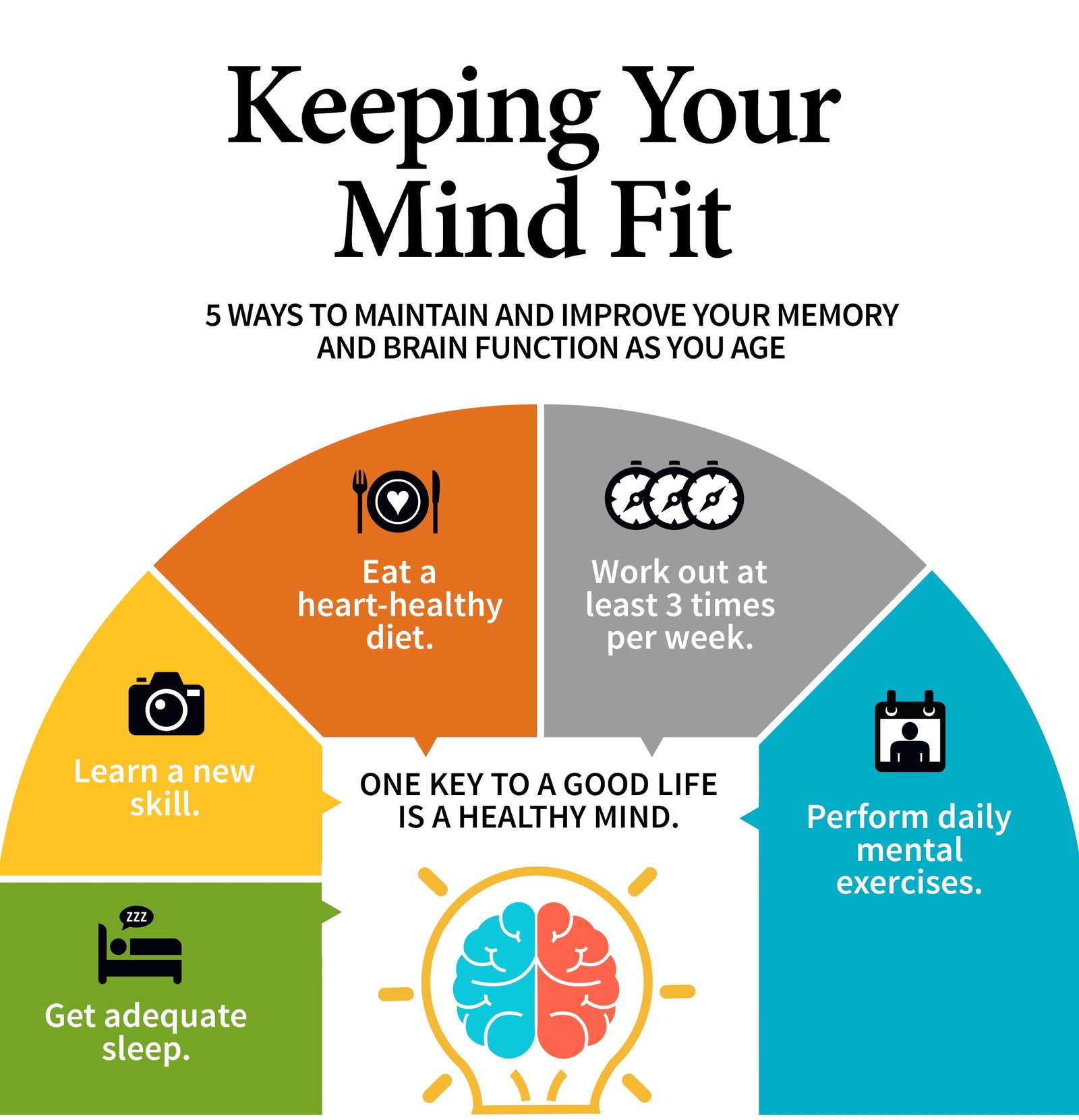
When sleep, hydration, blood sugar, stress and nutrition are addressed together, the haze usually lifts.
Nutrients and Compounds Studied for Mental Clarity
No capsule replaces sleep and a good diet — but specific, well-studied compounds can support the focus, recall and stress pathways most involved in brain fog. These are the ones with the most credible research behind them:
Memory & Recall
An Ayurvedic herb with multiple randomized trials supporting improved memory recall over 8–12 weeks of consistent use. Builds cumulatively rather than overnight.
Nerve Growth Support
Contains hericenones and erinacines studied for their role in nerve growth factor (NGF) and neuroplasticity. A promising, actively researched cognitive support ingredient.
Cerebral Blood Flow
Studied for improving circulation to the brain — relevant to the reduced blood flow that contributes to fog with age.
Mental Fatigue & Stress
An adaptogen shown to reduce mental fatigue and support faster information processing under stress — directly relevant to stress-driven fog.
Calm, Alert Focus
Promotes alpha brain-wave activity associated with relaxed concentration, helping cut through distraction without sedation.
Neuron Membrane Health
A phospholipid that supports the integrity of neuron cell membranes and healthy neurotransmitter release.
✅ About Memopezil™
Memopezil brings all six of these clinically studied ingredients together in one daily formula designed for cognitive support. It is manufactured in a U.S. FDA-registered, GMP-certified facility, is caffeine-free, and is backed by a 60-day money-back guarantee. Think of it as the nutritional layer that complements — never replaces — your sleep, nutrition and stress foundations. Learn more at the official Memopezil website →
Clear the Fog — Support Your Focus and Clarity
Memopezil™ combines six clinically studied ingredients for memory, focus and mental clarity in one daily capsule. Made in the U.S. in a GMP-certified facility, caffeine-free, no subscription required.
Get Memopezil — Official Site Only →✓ 60-Day Money-Back Guarantee · ✓ Free U.S. Shipping on Multi-Bottle Orders · ✓ Caffeine-Free
Frequently Asked Questions
Is brain fog after 50 a sign of dementia?
In the large majority of cases, no. Authorities including UCLA Health and Harvard Health describe brain fog as a typically temporary, mild cloudiness driven by sleep, stress, hormones and medications — not the progressive, function-impairing decline of dementia. It tends to come and go and doesn't stop you managing daily life. Progressive, worsening forgetfulness that affects safety and independence does warrant a medical evaluation.
What is the most common cause of brain fog after 50?
There's rarely one cause. The most common contributors are poor or fragmented sleep, hormonal changes (perimenopause, menopause, declining testosterone), chronic stress, blood-sugar swings, dehydration, certain medications, and low-grade inflammation. Most people have two or three overlapping at once.
How long does brain fog last?
It depends on the cause. Fog from one bad night's sleep or dehydration can lift within a day. Hormone- or stress-related fog may persist for weeks until addressed, and inflammation- or nutrition-related fog typically improves gradually over several weeks of consistent change.
Can brain fog be reversed naturally?
Often, yes. Because most fog is driven by modifiable factors, it frequently clears once sleep, hydration, blood sugar, stress and nutrition are addressed. UCLA Health reports that adults following several brain-protective habits have far lower rates of cognitive problems. Targeted nutritional support can complement those foundations.
What vitamins and nutrients help with brain fog?
Vitamin B12 (deficiency is a classic, reversible cause more common after 50), vitamin D, omega-3 DHA and magnesium are frequently linked to clearer thinking. Studied plant compounds include Bacopa Monnieri, Lion's Mane, Ginkgo Biloba, Rhodiola Rosea and L-Theanine. Confirm any deficiency with bloodwork before supplementing.
Does Memopezil help with brain fog?
Memopezil is formulated for cognitive support, combining clinically studied ingredients — Bacopa Monnieri, Lion's Mane, Ginkgo Biloba, Phosphatidylserine, Rhodiola Rosea and L-Theanine — several of which target the focus, clarity and stress pathways tied to brain fog. It's made in a U.S. FDA-registered, GMP-certified facility with a 60-day guarantee, and is meant to support, not replace, the lifestyle foundations of sleep, nutrition and stress management.
Sources & References
- Cleveland Clinic. "Brain Fog: What It Is, Causes, Symptoms & Treatment." my.clevelandclinic.org
- UCLA Health. "Brain fog and aging — what's normal and when to be concerned." February 2026. uclahealth.org
- Harvard Health Publishing. "Clearing up a foggy memory." health.harvard.edu
- WebMD. "Reasons You May Have Brain Fog." webmd.com
- AARP. "8 Science-Backed Ways to Beat Menopausal Brain Fog." April 2026. aarp.org
- OHSU Center for Women's Health. "Brain Fog vs. Dementia." ohsu.edu
- Alzheimer's Association. "10 Early Signs and Symptoms of Alzheimer's." 2025.
Disclaimer: This article is for educational purposes only and is not medical advice. Statements about dietary supplements have not been evaluated by the FDA. Dietary supplements are not intended to diagnose, treat, cure, or prevent any disease. Consult a qualified healthcare professional before making decisions about supplementation or persistent cognitive symptoms.